


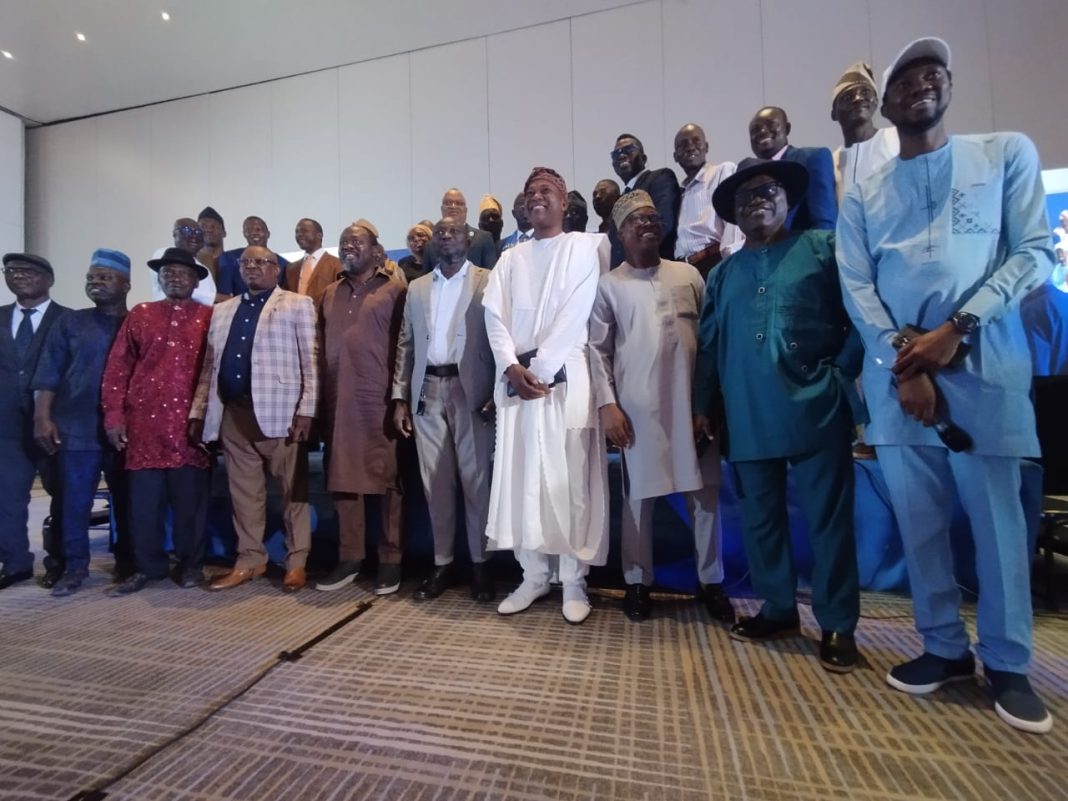
By Ogeyi Ebinyi
The Nigerian Institute of Electrical and Electronics Engineers (NIEEE) has called for accelerated adoption of decentralised power systems and stronger collaboration among government, industry and academia to improve electricity access across Nigeria and Sub-Saharan Africa.
The call was made during the Distinguished Electrical and Electronics Engineering Award Laureate (DEEEAL) lecture held in Lagos on the 24th of July 2026, where experts emphasised that distributed renewable energy and mini-grids remain critical to addressing the country’s energy deficit.
Representing the Honourable Minister of Power and Distinguished Guest of Honour, Chief Joseph Tegbe, the Director of Renewable and Rural Access at the Federal Ministry of Power, Dr Sunday Owolabi, said the event aligned with the minister’s vision for transforming Nigeria’s electricity sector.
According to Owolabi, the lecture theme, “Optimized Design and Interconnectivity Strategy for Distributed Generation in Multi-Community Mini Grids with Adaptive Grid Integration Pathways in Sub-Saharan Africa”, reflects the Federal Government’s commitment to expanding electricity access through decentralised energy systems.
He explained that the Electricity Act 2023 has created opportunities for energy decentralisation, enabling renewable energy projects and mini-grids to reach underserved rural communities. Owolabi added that smart technologies and interconnected energy systems would improve accountability in electricity generation and consumption, while encouraging consumers to generate and share power through net-metering arrangements.
He also urged young professionals to embrace innovation and research, stressing that opportunities in the renewable energy sector extend beyond electrical engineering to graduates from diverse academic backgrounds.
Delivering the award lecture, engineer and award recipient Engr. Ademola Isaac Agoro said Nigeria must develop home-grown engineering solutions to achieve sustainable energy access.
“We have to start thinking home-grown solutions,” Agoro said, noting that engineers from Europe or Asia cannot fully address Nigeria’s unique electricity challenges. He urged Nigerian electrical engineers to strengthen the country’s distribution networks by building more resilient grids capable of delivering reliable electricity to communities.
NIEEE President and Chairman-in-Council, Engr. Dr Felix Adeboye, described Agoro as a worthy recipient of the institute’s highest recognition. He said the selection was based on the awardee’s professional achievements, contributions to society and technical expertise.
Adeboye disclosed that the institute no longer holds the lecture annually but only when an individual with exceptional knowledge is identified. He praised Agoro’s presentation, describing it as one of the most outstanding technical lectures on mini-grid development delivered within Sub-Saharan Africa.
Explaining the concept of distributed electricity, Adeboye said mini-grids are designed to supply clusters of communities rather than depending solely on the national grid. He noted that groups of villages or even entire local government areas could operate interconnected mini-grids where electricity is shared among multiple users.
He added that mini-grid projects are already operational in states including Oyo and Kwara, but stressed that collaboration remains essential for scaling up electricity access nationwide.
“We have the ideas, but government has the policies that can drive implementation,” he said, calling for closer partnerships between government, professional bodies, academia and industry.
Adeboye further warned against the use of unqualified personnel in renewable energy installations, saying poor-quality components and substandard workmanship often lead to system failures. He maintained that properly designed solar mini-grids built with quality materials would provide reliable electricity for communities.
Professor Peter Olabisi Oluseyi of the University of Lagos described Agoro’s lecture as practical and accessible. He said the presentation simplified complex engineering concepts, making them understandable to investors, professionals and other stakeholders interested in expanding energy access.
Also speaking, Managing Director of Bayelsa Electricity Company Limited and the 12th DEEEAL Guest of Honour, Olice Kemenanabo, commended Agoro’s technical depth and welcomed his induction into the NIEEE Hall of Fame.
Kemenanabo said Agoro’s recommendations on distributed electricity should be adopted as a practical roadmap for rural electrification, adding that decentralised power systems offer the most sustainable pathway towards achieving reliable 24-hour electricity supply across Nigeria.
Click here to read related news


