


By Tomiwa Akinbamire
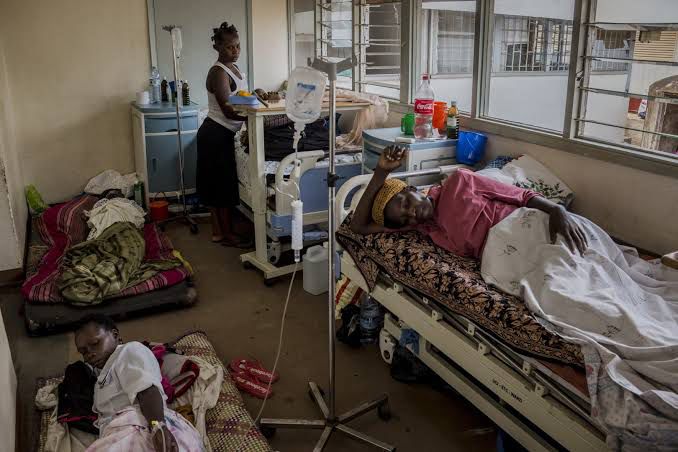
Nigeria’s health sector is under growing strain as years of inadequate funding, weak infrastructure, and workforce shortages continue to limit access to basic care. Despite repeated warnings from medical experts and documented cases of preventable deaths and health worker exhaustion, budgetary allocation to healthcare remains far below regional and global benchmarks. This report examines how chronic underinvestment is affecting service delivery, driving medical professionals out of the country, and worsening public health outcomes, while highlighting expert-backed calls for stronger investment and system reform.
In the 2025 national budget, ₦2.38 trillion was allocated to the health sector, accounting for only 4.33 percent of total federal expenditure. This figure falls well below the African Union’s Abuja Declaration target of 15 percent and the World Health Organization’s recommended benchmark of 13 percent. The funding gap has continued to shape the reality of healthcare delivery across Nigeria, with hospitals struggling to provide essential services due to shortages in equipment, medication, and personnel.
The consequences of this underfunding have been visible at the community level. An investigation by The Cable into the Jibawa community in Gaya Local Government Area of Kano State, Nigeria, revealed that more than 15 people, 10 children, and five women died between 2021 and 2024. The deaths were linked to the state of the only local clinic serving the area, which was described as dilapidated, understaffed, and lacking basic medical equipment. For residents, access to timely and effective healthcare remained largely out of reach.
The pressure on the healthcare system has also extended to medical professionals working within it. In September 2025, Dr. Femi Rotifa, a resident surgeon at Rivers State University Teaching Hospital, reportedly died while on duty. The incident drew attention to concerns around excessive workloads, inadequate staffing, and unsafe working conditions, challenges often associated with overstretched health systems.
Low funding and poor working conditions have further contributed to the growing migration of Nigerian health workers in search of better opportunities abroad. According to Punch News, citing the Nigeria Health Statistics Report for 2025, 4,193 doctors and dentists migrated from Nigeria in 2024, primarily to countries such as the United Kingdom, Canada, and the United States. The report also shows that overall health worker migration, including nurses and midwives, surged by 200 percent between 2023 and 2024, intensifying staffing gaps in public hospitals.
The impact of these shortages is reflected in maternal health outcomes. Government data released in April 2025 indicates that 172 out of Nigeria’s 774 local government areas account for 55 percent of maternal deaths nationwide, with an estimated 512 maternal deaths per 100,000 live births. These figures highlight how inadequate access to skilled personnel and functional health facilities continues to affect vulnerable populations, particularly in rural and underserved communities.
Medical experts have repeatedly raised concerns over the long-term consequences of neglecting the health sector. In a report by Punch News, Prof. Samuel Ohaegbulam, President of the Nigerian Academy of Medicine, criticized persistent underfunding, poor infrastructure, and weak budgetary commitment to healthcare. He noted that these challenges contribute to Nigeria losing over $1 billion annually to medical tourism while struggling to meet basic healthcare needs domestically.
Similarly, Dr. Emeka Ayogu, Chairman of the Nigerian Medical Association (NMA) Abuja Chapter, expressed concern during the second anniversary of the Tinubu administration that healthcare funding remains far below international recommendations. He warned that inadequate investment continues to affect doctors’ welfare, manpower retention, and overall service delivery, further weakening the system.
Taken together, these findings underscore the urgent need for stronger action to stabilize Nigeria’s healthcare sector. Experts emphasize that improving funding allocation, strengthening health infrastructure, and retaining skilled health workers are critical to reversing preventable deaths and restoring confidence in public healthcare. Expanding access to functional health facilities, medications, and basic health education, particularly in rural communities, remains central to building a more resilient and equitable healthcare system.
Click here to read the related post



Nigeria has a health management crisis, the sooner we deal with it the better for everyone.